
Congkak
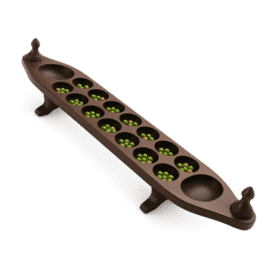 Congkak (หรือที่รู้จักในชื่อ Sungka และ Chongka เป็นต้น) เป็นเกมโปรยเมล็ดแบบหลายรอบ (multi-lap sowing game) ซึ่งคาดว่าน่าจะพัฒนามาจากเกม Mancala ในช่วงศตวรรษที่ 15
กระดาน Congkak หรือ Sungka ส่วนใหญ่มักมีหลุมข้างละ 7 หลุมอยู่สองฝั่ง และมีคลังเมล็ดอยู่ที่ปลายกระดานทั้งสองด้านสำหรับผู้เล่นแต่ละคน อย่างไรก็ตาม กระดานบางแบบอาจมีจำนวนหลุมมากหรือน้อยกว่านี้ แต่ละฝั่งของกระดานเป็นของผู้เล่นคนหนึ่ง กระดานมักทำจากไม้และแกะสลักเป็นลวดลายต่าง ๆ ส่วนเมล็ดที่ใช้เล่นโดยทั่วไปคือเปลือกหอยเบี้ย (cowrie shells) แต่ก็สามารถใช้วัสดุอื่นแทนได้
เกมนี้เล่นคล้าย Mancala โดยมีเป้าหมายเพื่อสะสมเมล็ดให้ได้มากที่สุด เริ่มต้นเกมโดยแต่ละหลุมมีเมล็ด 7 เมล็ด ผู้เล่นได้เมล็ดจากการวางลงในคลังของตนเอง ผู้เล่นทั้งสองเริ่มเล่นพร้อมกัน ในแต่ละเทิร์นผู้เล่นหยิบเมล็ดทั้งหมดจากหลุมฝั่งตนเองแล้วโปรยทีละเมล็ดตามเข็มนาฬิกา สามารถวางเมล็ดลงในคลังของตนได้แต่ต้องข้ามคลังของฝ่ายตรงข้าม หากเมล็ดสุดท้ายตกลงในหลุมที่มีเมล็ดอยู่ ผู้เล่นจะหยิบเมล็ดในหลุมนั้นขึ้นมาและเล่นต่อทันที แต่หากเมล็ดสุดท้ายตกลงในหลุมว่างฝั่งตนเอง ผู้เล่นจะยึดเมล็ดทั้งหมดจากหลุมฝั่งตรงข้ามที่อยู่ตรงกันรวมถึงเมล็ดที่เพิ่งวางลง เทิร์นจะจบลงเมื่อเมล็ดสุดท้ายตกในหลุมว่างไม่ว่าจะเป็นฝั่งใด เกมจบเมื่อเมล็ดในฝั่งใดฝั่งหนึ่งหมด และหากยังมีเมล็ดเหลืออยู่ในอีกฝั่ง ผู้เล่นที่เป็นเจ้าของฝั่งนั้นจะได้เมล็ดทั้งหมดที่เหลือ
เกมสามารถเล่นเป็นรอบ ๆ ได้ เมื่อจบรอบ ผู้เล่นแต่ละคนจะนำเมล็ดจากคลังของตนมาเติมลงในหลุมฝั่งตัวเอง โดยแต่ละหลุมต้องมี 7 เมล็ดเหมือนตอนตั้งต้น เมล็ดที่เหลือจะเก็บไว้ในคลัง หากผู้เล่นมีเมล็ดไม่พอเติมให้หลุมใดครบ 7 เมล็ด หลุมนั้นจะถูกเผา (burned) และนำออกจากการเล่น ผู้เล่นไม่สามารถวางเมล็ดลงในหลุมที่ถูกเผาได้ การเล่นแบบหลายรอบจะสิ้นสุดลงเมื่อผู้เล่นคนใดคนหนึ่งไม่สามารถเติมเมล็ดให้หลุมใดหลุมหนึ่งครบ 7 เมล็ดได้
จำนวนผู้เล่น: 2
ระยะเวลาของเกม: 10 mn
ความซับซ้อน: 1 / 5
เล่น Congkak และ 1414 เกมอื่นๆ ออนไลน์
ไม่จำเป็นต้องดาวน์โหลด - เล่นได้โดยตรงจากเว็บเบราว์เซอร์ของคุณ
กับเพื่อนและผู้เล่นนับพันจากทั่วโลก
ฟรี.

เล่น Congkak และ 1414 เกมอื่นๆ ออนไลน์
ไม่จำเป็นต้องดาวน์โหลด - เล่นได้โดยตรงจากเว็บเบราว์เซอร์ของคุณ
กับเพื่อนและผู้เล่นนับพันจากทั่วโลก
ฟรี.
กฎย่อ
OVERVIEW
Congkak is a 2-player mancala style game. The board has 2 large grooves on its left and right ends (storehouses), with 14 small holes in between (7 on each side). The game begins with 7 stones in each of the small holes and nothing in the storehouses. The storehouse to your left is yours, as are the 7 small holes nearest to you. Your goal is to have the most stones in your storehouse at the end of the game.
HOW TO PLAY
FIRST ROUND ONLY:
Each player chooses a hole on their own side of the board. The stones from these holes are SIMULTANEOUSLY redistributed around the board by placing one stone in each hole CLOCKWISE until all stones have been distributed. You will place a stone in your storehouse, in passing, but never in the opponent's storehouse.
Depending on where your last stone is placed, take the following actions:
1 - YOUR OWN STOREHOUSE: at the end of the board: Choose any hole on your side of the board, scoop up all of its stones, and again redistribute them around the board.
2 - ANY OCCUPIED HOLE: Regardless of which side of the board you end, if there are stones in that hole, scoop them all up, and again redistribute them around the board.
3 - EMPTY HOLE ON YOUR SIDE: Scoop up all of the stones on the opposite side of the board and place them into your storehouse. Your turn is over.
4 - EMPTY HOLE ON THEIR SIDE: Your turn is over.
SUBSEQUENT ROUNDS:
The player who finished their opening moves first will play first after their opponent is done. Then turns alternate between players. Only the first round is simultaneous.
GAME END
Play until all of the small holes on ONE side of the board are empty, but be careful: all remaining stones go into their owner's storehouse!
MULTIPLE ROUND OPTION
If playing more than one round, you will use the stones in your storehouses to reseed your side of the board. Distribute the stones evenly amongst the holes, up to 7 stones per hole.
~ Any stones left over go back into your storehouse. ~ If you don't have enough stones to fill a hole (it is empty), it is considered "burnt" and anyone's pieces that land in it automatically go to their opponent!
The loser of the previous round goes first. There is no simultaneous opening move.
Game ends when all of the houses are empty on either side of the board. Player with the most stones wins.